

University student Gizem Özdemir discussed her participation in the protests, the detention process she underwent, and its impact on her life.
Gizem
University students are detained during protests they participate in, sometimes released, sometimes arrested.
The processes of detention and the violations they experience during these processes also impact their education. Gizem Özdemir from Istanbul University described her experiences during these processes.
Could you tell us about yourself?
My name is Gizem Özdemir. I’m a third-year student in the History of Science program at Istanbul University. During my university years, I’ve been interested in my country’s social developments and political processes. At various times, I’ve participated in social opposition movements, youth movements, and student initiatives. From the start, being involved in youth organisations , generating ideas, and taking to the streets was not a choice for me, but a responsibility. Over this period, I’ve participated in numerous demonstrations, press conferences, and forums. Sometimes we handed out leaflets in front of schools. Sometimes we held forums in university hallways. At other times, we joined thousands in the streets and squares to express our demands..
Were you aware of the obstacles and police/judicial pressure you would face if you participated in the protests, and willing to take the risk?
The March 19th protests were a special and instructive time in this respect. Because I was already participating in protests regularly, I was aware of the possibilities we might face, the detentions, arrests, and police brutality. I was familiar with the detention process; I could foresee what we would face and the methods law enforcement might employ. We have left behind a time when everyone did their part. I acted accordingly. Because at that time, there was a tremendous anger and a desire for resistance, especially among the youth, that was too great to ignore.
Were you detained during a protest or a house raid? If so, what was the reason?
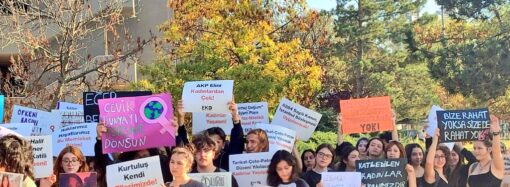
I saw two major detentions during the March 19th protests. The first happened on March 27th, when we met in front of Cevahir Shopping Mall, planning to march to Maçka Park. Students from many Istanbul universities came together to make our demands for freedom and equality known. Before we could start, the police stopped us from marching. When the crowd tried to continue, officers responded with force, without any warning. Around 100 students were detained that day. The second time was even harder. We tried to gather in Mecidiyeköy on May 1st for Labour Day and to repeat our earlier demands. This time, we were not allowed to come together at all. Police blocked us from the start, so we had to split into small groups. They then moved in on the student groups, even though we had not met or chanted any slogans. That day, I was detained with four friends. The official reason was violating Law No. 2911 on Meetings and Demonstrations, and we were accused of holding an unlawful march. Still, there was no warning or chance to leave.
Could you tell us about what you have faced during detention? What kind of rights violations did you encounter in terms of police violence and mistreatment?
Law enforcement officers immediately attacked us as soon as they saw us, knowing we had come to celebrate May Day. We were dragged on the ground and forced into detention vehicles. Many sustained visible injuries. Authorities cited the same law for all 36 individuals detained.
How long were you detained/jailed? Could you tell us about this period?
I was one of 36 people detained. After 24 hours, the prosecutor referred four of us, including me, to court for arrest. The judge denied this and released us on probation. Since then, I must check in weekly at the police station and have a travel ban.
How did the detention affect your life? Did it have a particular effect on your education and work?
While I was participating in those protests, I also had an important goal in another area of my life. I had decided to prepare for the university entrance exam again this year. However, with the March 19th protests and the following events, my preparation was significantly disrupted. Due to home raids, I was sometimes forced to stay at friends’ houses instead of my own place. The disruption to my schedule, increased stress, and the constant threat of surveillance and detention made preparing for the exam difficult. I wasn’t as productive as I’d hoped. Naturally, the exam results weren’t what I expected. That’s why I’m now researching transfer programs to change my major and trying to forge a new path.
Will you continue to participate in the protests? How do you see the future of the struggle?
Despite everything, I believe the March 19th process was a significant experience, not only in my own personal history but in the history of the entire youth movement. For almost two months, regular demonstrations took place at universities and in city squares. During this time, youth organisations increased, and more solidarity networks were formed within universities. Many students were detained on the streets for the very first time and were subjected to police violence, but they also learned the meaning of collective resistance, solidarity, and courage. I believe we witnessed one of the most massive and sustained youth resistances of recent years. This process holds crucial lessons for future resistance, both in terms of organisational forms and in enabling the youth movement to voice its demands more strongly. I will continue to be actively involved in the struggle from now on.




Leave a Comment
Your email address will not be published. Required fields are marked with *